

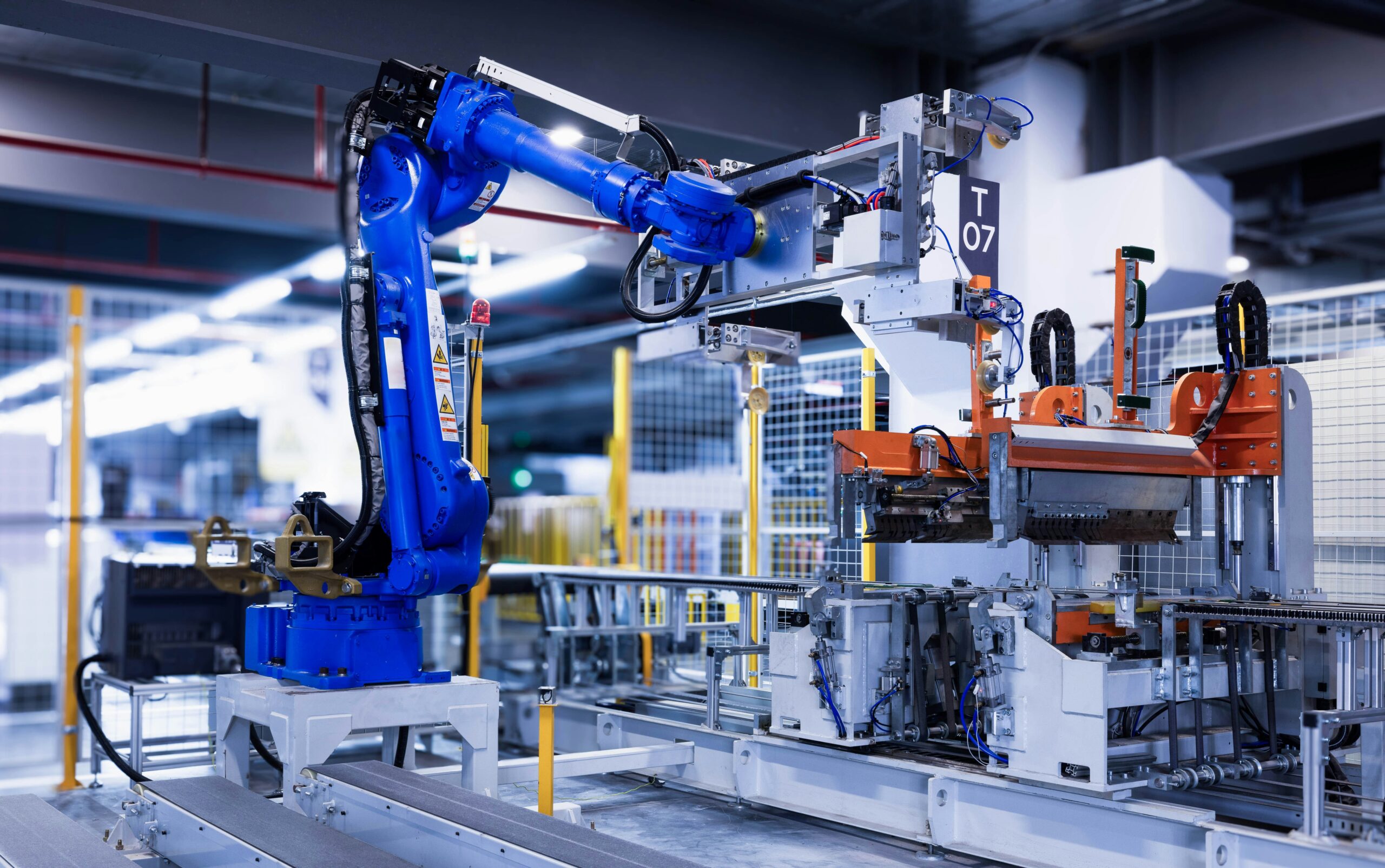
The rapid evolution of artificial intelligence has moved beyond digital screens and into the tangible world through a breakthrough known as Physical AI. For many years, automation remained limited to “blind” machines that simply followed a fixed set of instructions without understanding their environment.
However, the fusion of advanced neural networks with high-performance hardware now allows machines to perceive, reason, and act in real-time.
This shift is essential for industries that require more than just data processing; they need physical systems that can navigate complex spaces and handle unpredictable objects.
As businesses look to scale their operations, Physical AI offers a way to bridge the gap between virtual intelligence and mechanical execution. We are no longer talking about simple robots, but rather intelligent entities that learn from every physical interaction they experience.
This transformation enables a level of efficiency and safety that was previously considered impossible in traditional industrial settings. Companies that adopt these systems now will define the future of production and logistics for the next decade.
By integrating Physical AI, we unlock the potential for truly autonomous ecosystems that can adapt to the changing needs of the global market without constant human intervention.
A. Bridging the Gap with Real-World Perception

Physical AI stands apart from traditional software because it uses a suite of sensors to build a deep understanding of its surroundings. These systems utilize LiDAR, high-definition cameras, and tactile sensors to create a rich data map of the physical world.
Instead of just “seeing” a box, the AI understands the weight, texture, and orientation of the object in three-dimensional space.
This high level of perception allows the system to make micro-adjustments during a task, ensuring that it never forces a movement that could cause damage. It effectively gives machines the “common sense” they need to work safely in environments that are not perfectly organized.
From my perspective, many managers struggle with the “chaos” of a busy workspace where things are always moving around. You can solve this problem by deploying Physical AI that treats every obstacle as a learning opportunity rather than a system error.
This allows your automation to thrive in messy, real-world conditions instead of requiring a sterile and perfectly mapped environment. It shifts the burden of organization from your human staff to the intelligent machines themselves.
B. Accelerating Growth through Simulation and Digital Twins
One of the most powerful ways to scale Physical AI is through the use of high-fidelity simulations known as digital twins. Before a robot ever touches a piece of equipment on your floor, it spends thousands of hours practicing in a virtual world that mimics your exact facility.
This “sim-to-real” pipeline allows the AI to encounter millions of edge cases and potential accidents without any real-world risk.
Once the system masters the task in the virtual space, the knowledge is instantly uploaded to the physical hardware. This process drastically reduces the time it takes to deploy new automation across multiple global locations.
I have noticed that the biggest fear for stakeholders is the long “downtime” required to train new robotic systems. You should utilize pre-trained models that have already mastered 90% of your required tasks in a virtual environment.
This solves the deployment bottleneck and ensures your new systems become profitable in a matter of days rather than months. It makes scaling your business as simple as downloading a software update for your mechanical fleet.
C. Leveraging Edge Computing for Low Latency Actions
Scaling Physical AI effectively requires moving the “brain” of the operation closer to the machine itself through edge computing. When a robot needs to stop instantly to avoid a collision, it cannot wait for a signal to travel to a distant cloud server and back.
Edge hardware allows the AI to process sensor data locally, resulting in reaction times that are measured in milliseconds. This localized intelligence ensures that the system remains responsive even if your facility loses its connection to the external internet.
It also keeps sensitive operational data within your own walls, providing an extra layer of security for your proprietary processes.
The real trouble with large-scale automation is the “lag” that often occurs when too many devices compete for the same bandwidth. You can solve this technical hurdle by prioritizing “on-device” processing power for your most critical physical tasks.
This ensures that your facility maintains a high speed of operation regardless of your network’s current traffic or stability. It gives you a robust and independent infrastructure that doesn’t rely on perfect connectivity to stay productive.
D. Human-Centric Design and Collaborative Workflows
The true goal of scaling Physical AI is not to replace people but to create a collaborative environment where humans and machines excel together. These systems are designed with “cobot” principles, meaning they recognize human presence and adjust their speed or strength accordingly.
A humanoid or robotic arm can handle the heavy, repetitive lifting while a human worker focuses on quality control or creative troubleshooting.
This synergy improves the overall morale of the workforce because it removes the most physically punishing parts of the job. It also allows your company to maintain high output levels without burning out your best employees.
Many businesses face a “skills gap” where their current employees feel intimidated by new high-tech tools. You should introduce Physical AI as a “power tool” that enhances your workers’ capabilities rather than a replacement for their labor.
This perspective solves the issue of employee resistance and encourages your team to find new, innovative ways to use the technology. When your staff feels empowered by the AI, they become the biggest advocates for scaling the system even further.
E. Sustainable Scaling through Energy Efficiency
Physical AI contributes to a much more sustainable business model by optimizing every movement for maximum energy efficiency. Traditional robots often move with a jerky, high-energy consumption pattern because they lack a refined understanding of physics.
Intelligent systems calculate the most efficient path and the minimum amount of force required to complete a task, which significantly lowers your facility’s electricity usage.
Over time, these small savings across a large fleet of machines add up to a massive reduction in your operational costs and carbon footprint. It allows you to grow your production volume without a proportional increase in your environmental impact.
The hidden cost of scaling any industrial operation is often the skyrocketing utility bill that comes with more machinery. You should look at Physical AI as a way to “audit” your energy use in real-time as the machines perform their daily duties.
This solves the problem of wasteful energy spikes and helps you meet your corporate sustainability targets with ease. It turns your green commitments into a practical and profitable part of your daily manufacturing routine.
Conclusion

Physical AI is the best way to scale your modern business. It provides the precision that digital systems cannot reach. You can finally trust your hardware to think for itself. Technology allows us to grow without any massive human limits.
Smart machines handle the physical world with total and fast ease. Trust the data to keep your production moving forward now. The digital era demands a much higher speed of action. Intelligent automation is the only way to stay very competitive.
This change protects your market share and your future goals. Employees feel much better when machines handle the dangerous work. A safe workplace is a productive and happy workplace too. This builds a very strong culture of innovation in your team.
You save a lot of money through better energy use today. Efficiency is the key to a very healthy and solid profit. Physical AI ensures that no resource goes to waste on your floor. Don’t let the old ways of mechanical labor hold you back.
The tools for a truly smart factory are ready for you. Take the lead and secure your company’s legacy with AI. Building a resilient empire takes the right high-tech strategy. Physical AI provides the power that your brand really deserves. Success is certain when your machines are as smart as your people.

